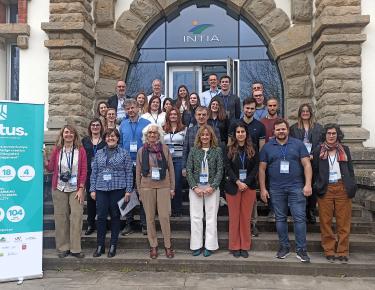
The Chartered Community of Navarre recently hosted the launch of the STRATUS project, coordinated by the public company INTIA, with Iniciativas Innovadoras participating as a partner entity. STRATUS, approved and funded by HORIZON EUROPE—the EU’s most important research and innovation program—aims to create a technical advisory network for the optimal use of fertilizers. The project involves 18 entities from 11 European countries, spans five years, and has a total budget of nearly four million euros.
STRATUS seeks to connect advisory bodies across Europe to accelerate the creation and exchange of knowledge on Integrated Fertilization Management. It supports the agricultural sector in applying this knowledge to meet the goals of the Farm to Fork and Biodiversity Strategies, reducing nutrient losses to the environment while maintaining soil fertility. The network will consist of three sub-networks: one focused on precision agriculture, another on organic fertilizers, and the third on soil quality.
Using a multi-actor approach, and with most partners being agricultural advisory organizations with strong expertise in various fertilization areas, STRATUS will build a network that reaches all EU countries. It will mobilize advisory services across the EU through measures that ensure their effective integration into national and regional Agricultural Knowledge and Innovation Systems (AKIS).
STRATUS will support the transition to more sustainable nutrient management by ensuring access to innovative solutions that optimize fertilizer use, reduce dependence on mineral fertilizers, and maintain crop yields.
This new knowledge will result in 60 demonstrations, training materials, and field visits involving stakeholders from all Member States. A digital platform will also be created to collect all information, interoperable with other advisory platforms and with EU-FarmBook.
Iniciativas Innovadoras plays a dual role in the project. On one hand, it will support the coordinating entity with administrative and financial management to ensure proper implementation. On the other, it will lead communication, dissemination, and exploitation of results to ensure that the knowledge reaches all relevant stakeholders, including EU advisory services, producers (farmers and livestock breeders), academia, and policymakers.
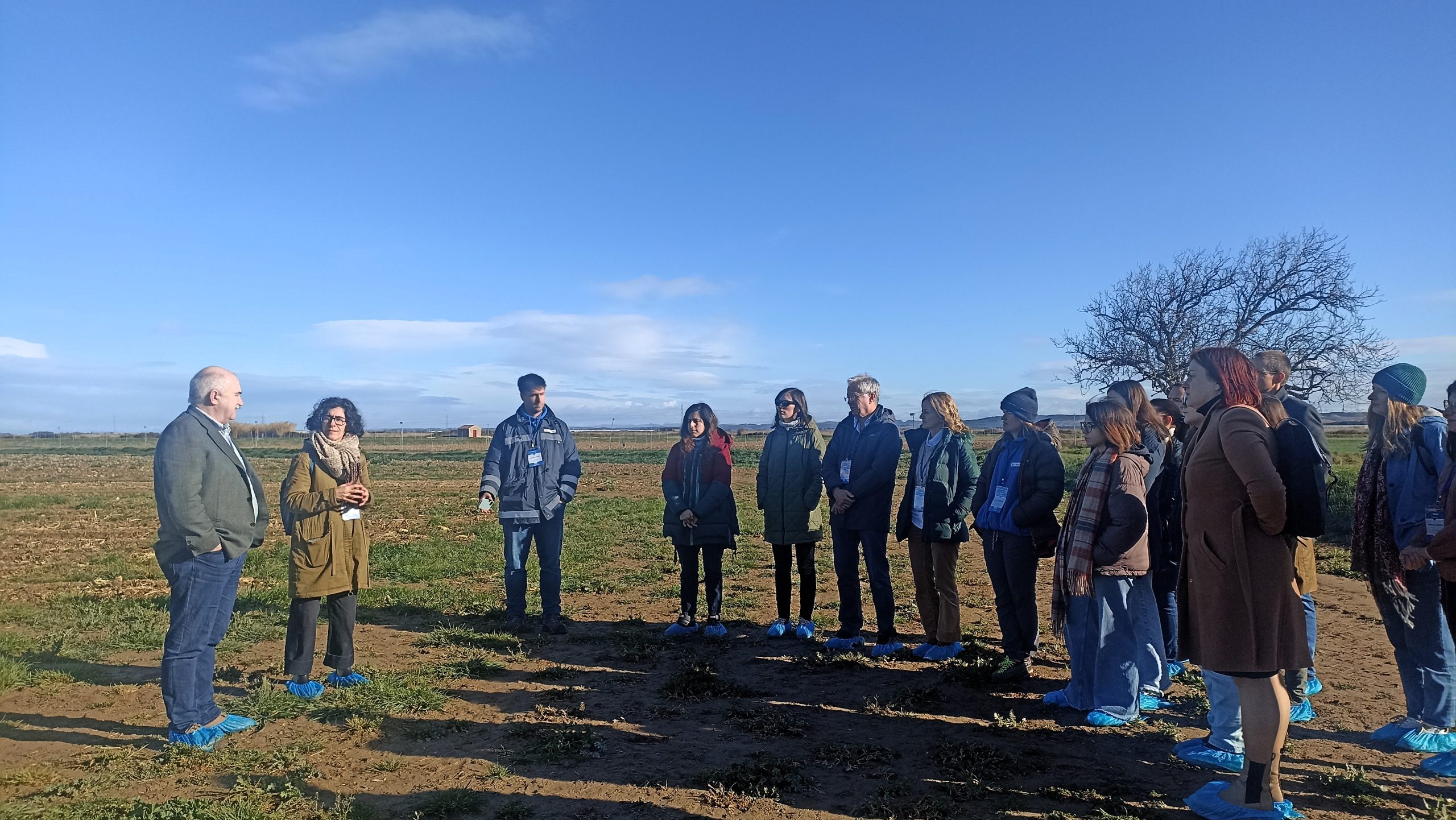
Partner entities had the opportunity to visit INTIA’s experimental farm in Navarre, specialized in horticultural crops, where organic fertilization trials and various strategies were presented.
The rest of the two-day program was dedicated to workshops where more than 30 participants from countries such as Sweden, Latvia, Belgium, the Netherlands, France, Greece, Italy, Poland, Slovenia, and Croatia got to know each other, share expectations, present initial activities, and define the first-year action plan using participatory methodologies.
STRATUS officially began on February 1, and its website will be operational in May. Until then, updates on events and other project activities can be followed on its social media channels.